Every year on March 28th, World Endometriosis Day serves as a reminder that beyond epidemiological data, there are millions of women whose quality of life is profoundly impacted by pain, diagnostic uncertainty, and the complexity of their care pathway.
The progress made over the last twenty years is undeniable. The mobilization of patient associations, healthcare professionals, and public authorities has transformed how endometriosis is perceived, with the condition now recognized as a major public health priority.
A better understanding of pathophysiological mechanisms, particularly regarding pain, the evolution of imaging techniques, the development of minimally invasive surgery, and new perspectives on diagnostic biomarkers are all milestones that testify to a remarkable collective effort.
However, a major challenge remains: the structuring of a coordinated care pathway.
Endometriosis is a complex pathology that cannot be managed in a fragmented way. It demands an integrated vision, combining early diagnosis, specialized expertise, multidisciplinary consultation, and long-term follow-up. Too often, patients still face inconsistent journeys marked by prolonged diagnostic delays, unsuitable care, and a lack of coordination between providers.
This necessary organization of the care pathway requires a concerted effort from many stakeholders (public authorities, health agencies, scientific societies, and patient associations) as well as a continuous commitment to both general and specialized training and collaborative research. While the quality of a surgical procedure depends on individual expertise, the quality of a care pathway depends on collective organization.
On the occasion of World Day 2026, we are calling for a new chapter: the pragmatic, equitable, and sustainable structuring of endometriosis care. Patients are waiting for an organization that matches the scientific progress achieved; the skills are present and the tools exist. They cannot settle for isolated excellence; they must benefit from coordinated excellence.
This month, we give the floor to Professor Arnaud Wattiez, a gynecological surgeon and renowned endometriosis expert. Having long been committed to managing this complex pathology, he shares his vision of the progress made and the main challenges that remain to be addressed.

The FINN Partners Team
Pr. Arnaud Wattiez: The first major breakthrough is undoubtedly the recognition of endometriosis as a true chronic pathology, one that can have a profound impact on quality of life, fertility, socio-professional life, and psychological well-being.
Twenty years ago, this disease was still largely underdiagnosed and trivialized, often dismissed as “normal” menstrual pain. Today, thanks to the growing mobilization of healthcare professionals and public awareness raised by associations, symptoms are better identified, and the diagnostic delay is beginning to shrink in many countries. Patients are seeking help earlier, and doctors are better trained to recognize the red flags.
This recognition has been accompanied by considerable progress in diagnostics. Imaging techniques, particularly specialized ultrasound and pelvic MRI, have fundamentally transformed our ability to map lesions before any intervention, especially in deep forms of the disease. We can now better anticipate surgical complexity, identifying potential involvement of the digestive or urinary systems, and define a therapeutic strategy tailored to the patient. Alongside imaging, research has identified characteristic biomarkers in saliva or blood, which could assist in diagnostic orientation or finer patient stratification. Their integration into the diagnostic arsenal must be done rigorously, complementing clinical examination and imaging.
On the surgical front, advances have also been significant, particularly with the development of minimally invasive approaches that reduce complications. Experienced teams can now remove complex lesions, specifically deep-seated ones, with a very high level of precision.
Beyond surgical technique, we are now better able to anticipate surgical outcomes and better inform the patient about what the surgery can improve, and what it may not fully resolve. By clarifying expectations, shared decision-making with the patient is enhanced. The goal is no longer just to remove a lesion, but to improve overall management by integrating the patient’s specific life goals, such as a desire for pregnancy.
Finally, our understanding of pain has become more refined. We now know that endometriosis-related pain is not solely mechanical or inflammatory. Complex mechanisms of neurological sensitization can set in, meaning pain continues to be felt even after a lesion is removed, particularly when the diagnosis was late. It is somewhat like “phantom limb” pain following an amputation. This evolving knowledge of pain encourages us to intervene earlier in certain situations, for example, to prevent a young patient from eventually developing persistent chronic pain that exists independently of the original lesion.
Pr. A.W.: The first challenge is the harmonization of practices. Unlike oncology, for example, endometriosis management does not yet rely on robust, large-scale, harmonized multicenter protocols. Recommendations are improving but still sometimes rely on inconsistent levels of evidence.
For instance, there are few collaborative studies that allow for recommendations based on large volumes of comparable data. However, surgery for deep forms of the disease is demanding; it requires a perfect mastery of pelvic anatomy, the ability to work near nerve, digestive, or urinary structures, and an individualized strategy. Volume of activity and experience play a decisive role. Incomplete excision can lead to persistent symptoms or recurrence, but surgery that is too extensive can expose the patient to unnecessary complications. The challenge is finding the right balance: decisions must be mastered, deliberate, and explained.
Another major challenge is coordination of care. Managing endometriosis often requires a multidisciplinary approach: gynecologists, specialized radiologists, surgeons, pain specialists, fertility teams, and sometimes psychologists.
Surgery is only one moment, sometimes a decisive one, in a much longer journey. Pre- and post-operative support, pain management, hormonal follow-up, and fertility goals all require coordination that is not yet optimal. Too often, care remains fragmented when we need a more established care pathway.
Chronic pain, which remains a major issue, illustrates the need for a structured organization. Some patients experience persistent pain despite well-executed surgery; it is then essential to identify the mechanisms at play: nociceptive pain (related to lesions), neuropathic pain, central hypersensitization, or psychological factors. This requires specific skills and a multidimensional approach. Finally, disparities in access to care still exist, as not all regions have specialized endometriosis centers, particularly for managing deep forms.
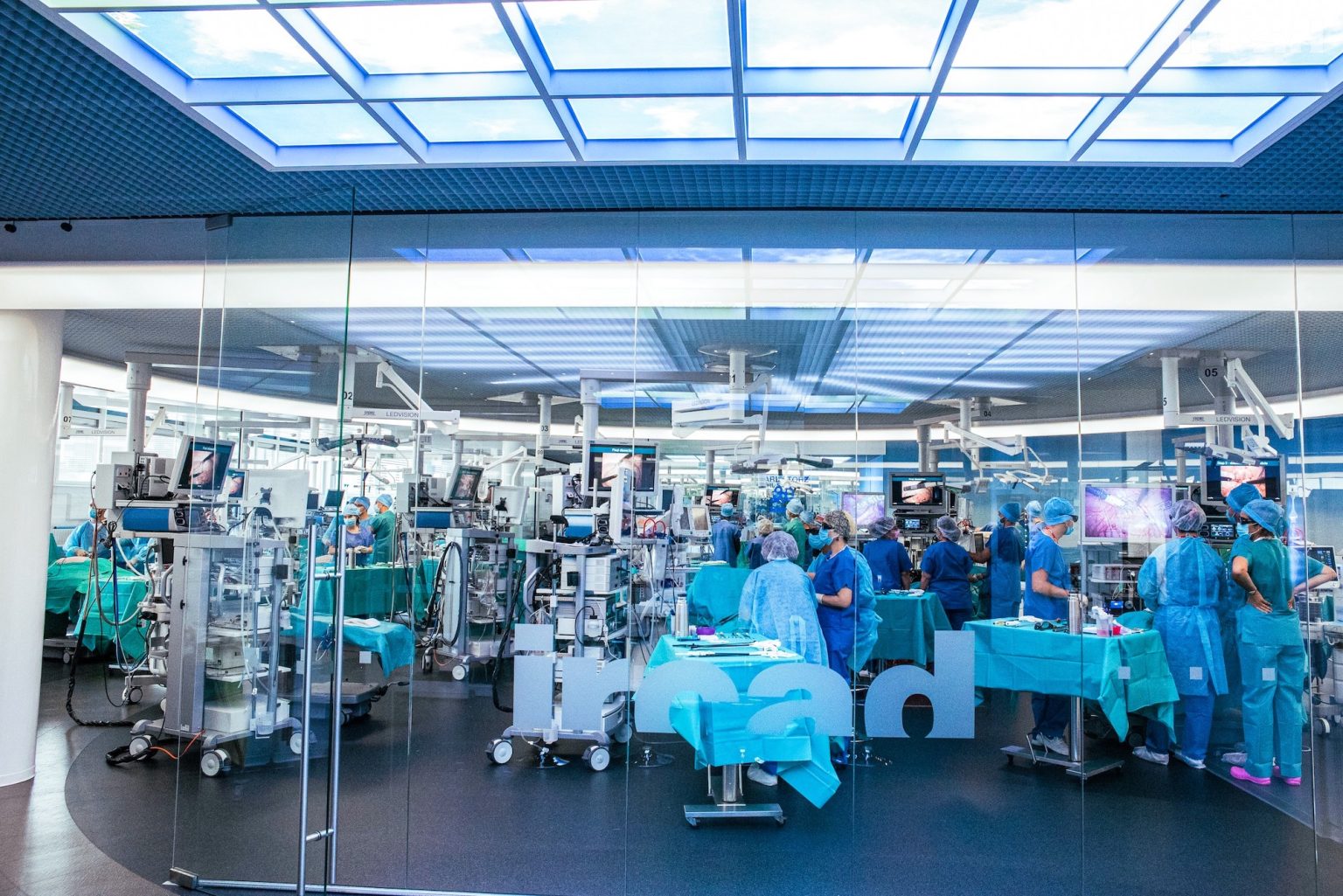
Pr. A.W.: IRCAD’s goal is not limited to teaching technical gestures; it is about conveying a deep understanding of pelvic anatomy and teaching the critical analysis of indications, therapeutic options, surgical strategy, and complication management. This immersive training, including simulator practice and detailed clinical case analysis, allows surgeons to acquire not just technical skills, but also the analytical reflexes they can apply in daily practice.
Minimally invasive surgery has transformed endometriosis management, especially for deep forms, by providing better visualization of anatomical structures and finer dissection. This leads to better preservation of healthy tissue, fewer post-operative complications, and faster recovery. Robotic surgery is part of this innovative dynamic, offering a stable 3D vision, increased precision, and improved ergonomics.
In complex cases, such as dissecting delicate areas like retro-cervical or digestive involvement, robotics can improve the quality of excision and surgical comfort. It is an additional tool for the surgeon, one that must be used reasonably and thoughtfully, given the cost of the equipment. At IRCAD, we train surgeons to choose the best strategy for each patient, combining human expertise with technological innovation. Our goal is the reasoned, mastered use of innovation focused on excellence and safety.
Pr. A.W.: Research is a fundamental pillar of IRCAD. Several areas are particularly promising, especially the use of digital technologies.
One major focus is pre-operative surgical modeling, based on 3D reconstruction capabilities from advanced imaging. The concept of the “digital twin”, virtually visualizing and analyzing a patient’s specific anatomy before surgery, is gradually becoming a reality. By simulating the surgery virtually, we can anticipate technical difficulties and implement more personalized surgery.
The use of Artificial Intelligence (AI) also opens interesting perspectives, particularly in image interpretation. AI can help improve the recognition of complex lesions, identify anatomical areas at risk (nerves or vessels), and optimize surgical planning.
While these tools are still being validated, they represent considerable potential for improving care. Finally, building harmonized international databases is a strategic priority. We must collect quality data on surgical outcomes, complications, fertility, and quality of life to refine recommendations and optimize therapeutic strategies. Through its international reach and its network of “mirror” IRCAD centers worldwide, IRCAD plays a key role in this collaborative research.
Pr. A.W.: That priority would be the structuring of a coordinated care pathway, centered on expertise and continuity.
It is not just about creating surgical centers of excellence, but building organized networks capable of ensuring coordination between primary care, specialized imaging, hormonal treatment, pain management, fertility, and surgery. Surgery is an important step, but it is only one part of the therapeutic trajectory.
The challenge is to guarantee every patient rapid access to an expert evaluation, followed by consistent, personalized support over time. Detection must be as early as possible to prevent progression toward more complex forms. For patients with complex forms, it is essential that they are referred to trained, experienced teams, as the quality of surgery directly influences long-term outcomes.
Spreading best practices, training more high-level surgeons, structuring data collection, and integrating innovation in a reasoned way are all levers for sustainable progress. Endometriosis is a complex pathology; its management must reflect that complexity—but in an organized, coordinated way based on excellence.
Founded in 1994 by Professor Jacques Marescaux, IRCAD is an institute dedicated to training and research in minimally invasive surgery. The Strasbourg institute is internationally renowned for the excellence of its training programs, whether on-site, with nearly 8,800 surgeons trained in Strasbourg each year, or online through the free WebSurg university, which has more than 470,000 registered members worldwide.
For more information, visit: https://www.ircad.fr/en/
We hope you enjoyed this 23rd edition of the IRCAD newsletter.
For any request for information, subscription, or unsubscription:
FINN Partners – sante@finnpartners.com